

The Power of 5G and Ultra-Fast Connectivity: With its previously unheard-of speed, ultra-low latency, and capacity to link billions of devices at once, 5G ushers in a new age in digital communication. 5G is much more than just a 4G upgrade; it is the basis for future developments, ranging from enhanced healthcare solutions. Virtual reality for smart cities and driverless cars.
Its blazing-fast connectivity makes it possible for smooth real-time interactions, revolutionising the way we communicate, work, and live. Globally, 5G networks are opening up enormous possibilities and creating a hyperconnected society where technology is becoming more sensitive, intelligent, and ingrained in daily life.
The Power of 5G and Ultra-Fast Connectivity.
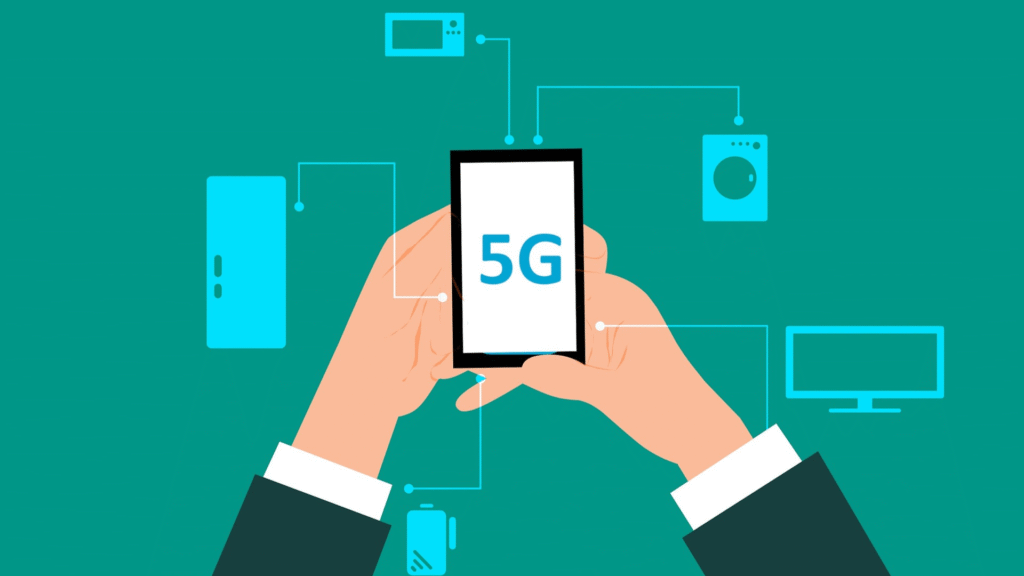
The Power of 5G and Ultra-Fast Connectivity: The way individuals connect, communicate, and experience the digital world has seen a remarkable transition in recent years. Developments in wireless technology have played a major role in this shift, leading to the emergence of fifth-generation mobile networks, or 5G. 5G promises lightning-fast connectivity, significantly lower latency, and the ability to accommodate billions of devices at once, making it more than just a faster version of 4 GG. This technology’s impact is changing sectors, opening up new technological possibilities, and redefining what is feasible in a future where everything is connected.
A New Era of Speed and Efficiency.
One of the primary criteria used to evaluate wireless generations has always been speed. 5G networks offer a new level of performance, whereas 4G networks made it possible to do things like stream HD videos and play light mobile games. Up to 100 times quicker than 4G, 5G networks can achieve 10 gigabits per second under the right circumstances. Real-world benefits result from this enormous bandwidth increase: movies download in a matter of seconds, high-quality streams load instantaneously, and apps react with almost no lag.
But speed is not the only factor. The extremely low latency of 5G, which is usually under 1 millisecond, is one of its most revolutionary aspects. In many applications, including gaming, robotics, and autonomous driving, low latency is even more important than sheer speed. Latency is a measure of how long it takes for data to move from one place to another. 5G opens up opportunities that were unimaginable just ten years ago by enabling real-time connectivity between devices and systems with such low latency.
Massive Connectivity for a Smart World.

The Power of 5G and Ultra-Fast Connectivity: 5G’s capacity to accommodate an astounding number of linked devices per square kilometre is another distinguishing feature. As the Internet of Things (IoT) makes the modern world increasingly interconnected, this skill is crucial. Intelligent transportation systems, connected automobiles, smart industries, and smart homes all depend on continuous device connectivity.
While 4G networks struggle under dense device loads and heavy traffic, 5G is designed to handle up to one million connected devices per square kilometre. This capacity is crucial for:
- Smart cities, where sensors monitor traffic flow, energy usage, and environmental conditions.
- Industrial automation is where machines, robots, and tools must coordinate efficiently.
- Healthcare, where wearable devices track patient health in real time.
- Agriculture, where IoT sensors monitor soil conditions, water usage, and crop growth.
The ability of 5G networks to simultaneously manage such extensive device ecosystems forms the foundation for a world where everything—from refrigerators to traffic lights—can communicate and interact intelligently.
Transforming Industries Through Innovation.
5G’s significant effects go much beyond individual handsets and quicker internet. It is a key technology driving the upcoming wave of commercial and industrial innovation in many different fields.
Healthcare.
5G makes it possible for telemedicine, remote surgery, and real-time patient monitoring with previously unheard-of accuracy in the healthcare industry. 5G’s exceptionally low latency allows doctors to perform treatments from thousands of miles away using robotics and high-definition video. The adoption of 5G-powered devices by ambulance crews to send real-time patient data to hospitals before arrival allows for quicker decision-making and better results, which benefits emergency services as well.
Transportation and Autonomous Vehicles.
Continuous, real-time communication between autonomous vehicles and the surrounding infrastructure is necessary. Vehicles with 5G can immediately interpret data from mapping systems, cameras, and sensors. This feature improves safety, lowers accident rates, and makes travel routes more effective. Smoother transportation flows can result from traffic management systems’ ability to dynamically adjust based on current conditions.
Manufacturing.
Industry 4.0 is being adopted by manufacturers, where 5G enables completely automated manufacturing lines, predictive maintenance, and remote monitoring. 5G-powered AI-driven robots operate securely alongside people in smart factories, increasing output and decreasing downtime.
Entertainment and Immersive Experiences.
5G is transforming the entertainment sector as well. Smooth experiences in virtual reality (VR) and augmented reality (AR) are made possible by extremely fast speeds and low latency. Media firms may provide real-time interactive experiences, such as live concerts and athletic events with immersive digital overlays, while gamers can enjoy lag-free cloud-based gaming.
Enabling a Future of Smart Everything.
Beyond industry, 5G will influence billions of people’s daily lives. Better smartphone experiences, more dependable video calling, and smarter home appliances are all made possible by technology for customers. While augmented reality glasses might ultimately take the role of smartphones as the main interface for everyday communication, autonomous drones could deliver products effectively.
5G-enabled smart city solutions offer better traffic control, lower pollution, increased public safety, and more economical use of resources and energy. As 5G infrastructure is adopted by governments and urban planners, city dwellers will benefit from seamless, intelligent, and adaptive services.
Challenges and Considerations.
Although 5G has a lot of potential, there are obstacles in the way of its deployment. Since 5G depends on a dense network of tiny cell towers to sustain its high performance, infrastructure continues to be one of the largest obstacles. Deployment may be slowed by this requirement for physical infrastructure, especially in underserved or rural areas.
Security is yet another important issue. There is a greater chance of cyberattacks when there are billions of connected gadgets. Strict standards and ongoing innovation will be needed to guarantee secure device connection, safeguard user privacy, and create robust networks.
Additionally, new gear is required for the 5G transition. It can be expensive for businesses to invest in 5G-compatible equipment, and many consumers will need to replace their gadgets.
The Path Forward.
The Power of 5G and Ultra-Fast Connectivity: Notwithstanding these challenges, 5G adoption is still accelerating globally. Governments, private businesses, and telecommunications carriers are all making significant investments in creating new applications and extending 5G coverage.
More industries are using 5G in their operations every year. Emerging 5G-based goods, services, and innovations are speeding up digital transformation and influencing connectivity in the future. The foundation of 5G is already changing modern life, even though its full effects might not be felt for years.
Conclusion.
One of the most revolutionary technological developments of the twenty-first century is the potential of 5G and ultra-fast connectivity. It offers previously unheard-of speed, exceptionally low latency, and the capacity to accommodate enormous networks of interconnected devices. 5G is accelerating innovation across every industry and radically altering how societies operate, from healthcare to transportation. Manufacturing to entertainment.
5G is at the forefront of this transition as the world embraces a future characterised by intelligent gadgets, smart infrastructure, and digital ecosystems. It is the cornerstone of the upcoming era of global advancement, not just the next development in mobile technology.

