

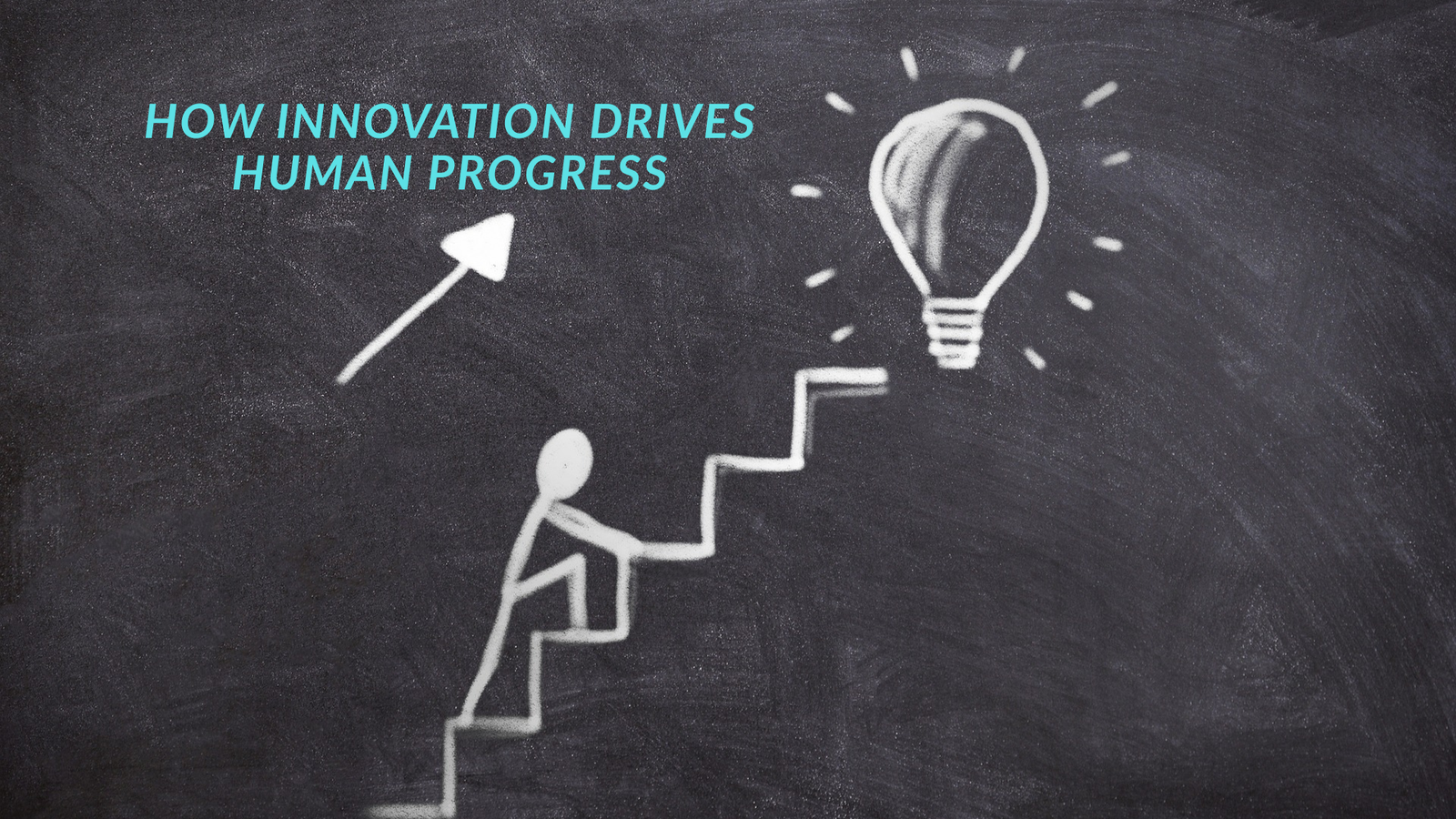
How Innovation Drives Human Progress: The foundation of human progress is innovation, which has fuelled breakthroughs that have changed cultures across time. Every major development, from the wheel to the emergence of artificial intelligence, has changed the way we communicate, live, and see the world.
It displays the inventiveness and curiosity of people—the will to make their fantasies come true. Innovation continues to be the driving force behind civilisation’s advancement as technology advances, enabling humans to create a more intelligent, sustainable, and connected future.
How Innovation Drives Human Progress.

Innovation has been the engine of human progress throughout history. Innovation has changed how we live, work, communicate, and perceive the world, from the development of the wheel to the emergence of artificial intelligence. It serves as a link between the imagination and the real world, transforming human curiosity into observable advancement.
Moments of innovative thinking that not only resolved preexisting issues but also unlocked new possibilities have characterised every period of civilisation. Therefore, innovation is more than just technology; it is a basic aspect of human development that shapes economies, civilisations, and even our conception of what it means to be human.
The Essence of Innovation.
How Innovation Drives Human Progress: Fundamentally, innovation is the use of original concepts to produce value. It is not the same as mere invention, which is the production of anything completely original. Innovation, on the other hand, is about improving what already exists by making it better, quicker, or more effective.
It takes both creativity and execution. A society’s capability to innovate is based on its receptivity to new concepts, risk-taking attitude, and ability to put knowledge into action. Environments that promote inquiry, teamwork, and experimentation are conducive to innovation.
This inventiveness is the foundation of human progress. People are naturally adept at solving problems. From prehistoric hunters making better equipment to contemporary scientists developing vaccines that can save lives, the drive to innovate stems from the desire to overcome obstacles and enhance people’s quality of life. In this way, invention is a survival drive rather than just the result of intellectual curiosity.
Historical Milestones of Innovation.
How Innovation Drives Human Progress: The transformative impact of innovation is demonstrated throughout human history. Every significant period of civilisation has been characterised by a number of conceptual and technological innovations that have advanced societies.
The ability to control fire was one of the first and most important inventions. In addition to offering warmth and safety, this discovery paved the way for the invention of cooking, which enhanced brain growth and nourishment. By bringing together far-flung communities and facilitating the expansion of trade networks, the wheel’s development transformed transportation and commerce.
Another pivotal moment in human history was the Industrial Revolution of the 18th and 19th centuries. Electricity, mechanised manufacturing, and the steam engine were among the innovations that revolutionised economies and ways of life. Urbanisation, economic growth, and the emergence of a global economy resulted from the first time that large-scale production took the place of manual labour.
Innovation sped up at a never-before-seen rate in the 20th and 21st centuries. Communication, education, and business have all changed with the invention of the computer, the internet, and mobile technologies. While medical advancements like genetic engineering and antibiotics increased life expectancy and enhanced worldwide health, space exploration broadened humanity’s perspectives beyond Earth.
Innovation and Economic Growth.
Economic progress is also propelled by innovation. Productivity, competitiveness, and living standards are generally greater in countries that encourage innovation. The success of technologically advanced economies like the US, Japan, South Korea, and Germany demonstrates the connection between innovation and economic development.
The renowned economist Joseph Schumpeter defined innovation as the process of “creative destruction”. He maintained that innovation upends established markets, making outdated business models and technology obsolete while opening up fresh avenues for expansion. For instance, traditional landlines have been declining, and app-based economies have emerged as a result of the telecommunications industry’s transformation due to the proliferation of smartphones.
Innovation has the potential to stimulate economic inclusion in developing nations. For example, M-Pesa in Kenya and other mobile banking services have transformed financial access for millions of people who do not have traditional bank accounts. These inventions empower people, encourage entrepreneurship, and promote community development by making transactions safe and easy. As a result, innovation not only promotes economic expansion but also heals social and financial wounds.
Innovation in Science and Technology.
Innovation in science and technology has undoubtedly had the biggest influence on human advancement. Technology uses the knowledge base that science gives to solve problems in the real world. They have a mutually beneficial connection that encourages research and advancement.
Numerous lives have been saved by medical advancements like vaccines, antibiotics, and surgical methods. In 2020, the quick creation of COVID-19 vaccinations showed the strength of contemporary innovation systems by fusing biotechnology, data science, and international cooperation to solve a pressing emergency. Likewise, developments in machine learning and artificial intelligence (AI) are revolutionising personalised medicine, medication development, and diagnostics.
Innovations in sustainable agriculture, waste management, and renewable energy are essential to the fight against climate change, according to environmental science. Electric cars, wind turbines, and solar panels are examples of how environmental stewardship and technical advancement may coexist. Humanity has the means to move toward more sustainable consumption habits and greener energy systems by utilising innovation.
Every facet of human existence is being transformed by the ongoing digital revolution. From manufacturing to healthcare, sectors are being redefined by AI, robotics, and quantum computing. From virtual assistants to predictive analytics, the incorporation of AI into everyday tasks shows how innovation boosts ease and efficiency. But these developments also bring up moral concerns regarding work, security, and privacy. Societies must make sure that innovation advances humankind’s interests beyond financial gain as technology advances.
Innovation and Human Potential.
Innovation fosters human potential in addition to its economic and technological advantages. It promotes cooperation, critical thinking, and creativity. Innovation-focused educational programmes equip students to not only embrace change but also lead it. As countries and organisations collaborate to address common issues like pandemics, poverty, and climate change, innovation promotes international collaboration in a world growing more interconnected by the day.
Innovation has a cultural component as well. It affects human expression, communication, and the arts. Because of the democratisation of creativity brought about by the internet age, musicians, authors, and artists can now reach a worldwide audience. Virtual reality experiences, social media, and online learning environments are examples of how innovation broadens the scope of human understanding and interaction.
Most importantly, innovation provides people a sense of agency, or the conviction that they can change and better their situation. Innovative thinking enables people to imagine better futures and take action to make them a reality, whether through social activism, scientific research, or entrepreneurship.
The Challenges of Innovation.
Innovation creates obstacles even as it propels advancement. Ethical quandaries, inequality, and job displacement can result from rapid technological progress. For instance, automation and artificial intelligence (AI) have the potential to replace traditional jobs, forcing communities to reconsider social safety nets, workforce training, and education. Furthermore, existing disparities may be made worse by the digital divide, which is the difference between those who have access to technology and those who do not.
Additionally, there is a chance that innovation will surpass regulation. Complex ethical and legal issues are brought up by emerging technologies such as data surveillance, artificial intelligence, and genetic modification. Who is in charge of these technologies? How can we stop them from being misused? One of the hallmark problems of the contemporary age is striking a balance between creativity and accountability.
Conclusion.
Human development depends on innovation. It has fuelled economies, moulded civilisations, and advanced our understanding of the world. Innovation, from the first tools to the most recent technological advances, is a reflection of humanity’s never-ending pursuit of bettering life and expanding our knowledge of the world.
However, we must also develop discernment as we innovate more, making sure that advancements are in line with moral standards and the interests of all. Innovation is truly by its ability to improve human well-being, promote fairness, and preserve the environment for coming generations, not just by its technological accomplishments.

