


How AI is Transforming Industries: Globally, artificial intelligence (AI) is redefining industries, spurring innovation, and changing how companies run. AI is improving productivity, accuracy, and creativity across a variety of industries, including healthcare, finance, manufacturing, and education, by enabling machines to learn, evaluate data, and make informed decisions.
AI is changing conventional procedures and opening new growth opportunities across industries, such as automated diagnostics in healthcare and predictive analytics in finance. A new era of technical innovation and digital transformation is being ushered in as businesses increasingly incorporate AI into their operations. This is not only increasing productivity but also changing employment positions, consumer experiences, and competitive strategies.
How AI is Transforming Industries.
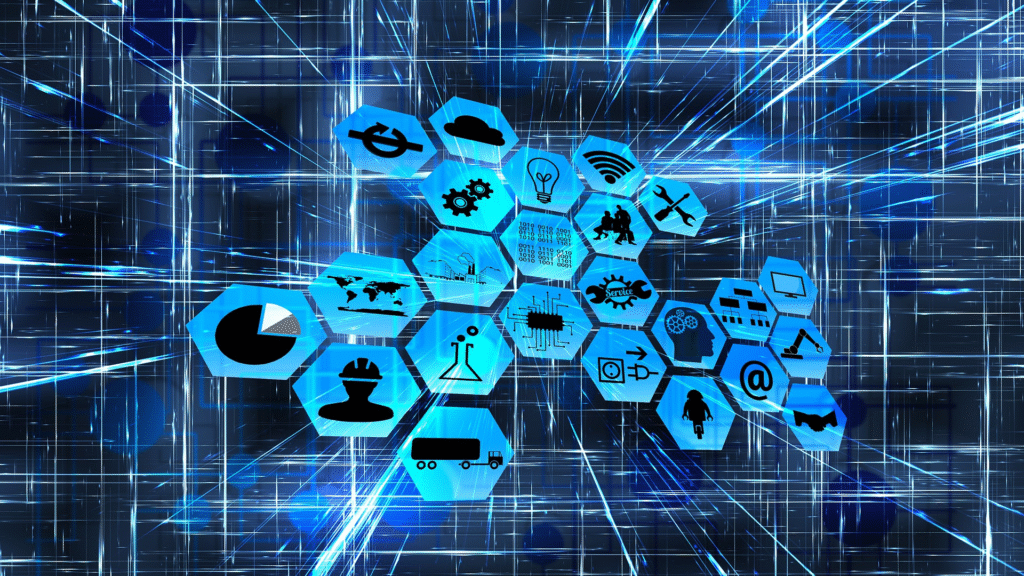
How AI is Transforming Industries: One of the 21st century’s most revolutionary forces, artificial intelligence (AI) is changing almost every industry worldwide. AI is not just increasing productivity but also changing how people use technology in a variety of fields, including healthcare, finance, education, manufacturing, and entertainment.
Rapid developments in robotics, computer vision, natural language processing, and machine learning have made it possible for governments and corporations to transform vast volumes of data into insights that can be put to use. As a result, AI is transforming the structure and competitiveness of international companies by spurring innovation, optimising workflows, and facilitating more intelligent decision-making.
AI in Healthcare.
How AI is Transforming Industries: The healthcare industry is one of the areas where AI is having the biggest effects. AI-driven technologies have transformed patient care, treatment planning, and diagnosis. Machine learning algorithms are sometimes more accurate than human experts at analysing medical pictures like CT scans, MRIs, and X-rays. AI technologies, for example, can now identify early indicators of diseases like cancer, diabetic retinopathy, and cardiovascular disorders, enabling quicker intervention and better results.
Drug development and discovery are likewise being revolutionised by AI. Conventional medication research is costly and time-consuming, frequently requiring more than ten years. Artificial intelligence (AI) models can significantly cut costs and time by simulating medication interactions, predicting molecular activity, and analyzing biological data. AI systems that can find possible medication candidates in months as opposed to years are being developed by companies like DeepMind, Insilico Medicine, and IBM Watson.
AI in Finance.
How AI is Transforming Industries: One of the first sectors to use AI technology was the finance sector. Algorithmic trading, fraud detection, credit scoring, and customer support all use AI-powered algorithms. Millions of transactions are processed by financial institutions every day, and AI technologies assist in real-time anomaly detection that could point to fraudulent activity—something that manual monitoring cannot do.
The predictive powers of AI are also crucial for financial management. By using machine learning to customise investment portfolios to each client’s unique risk tolerance, robo-advisors like Wealthfront and Betterment make wealth management more approachable for regular people.
AI in Manufacturing.

Another sector that is drastically changing as a result of AI is manufacturing. The term “Industry 4.0” refers to the combination of artificial intelligence (AI), robots, automation, and the Internet of Things (IoT). AI is used by smart factories to monitor supply chains, anticipate equipment problems, and improve manufacturing lines.
AI-powered predictive maintenance enables machines to self-monitor and notify workers before a malfunction. This lowers maintenance expenses, increases the longevity of machinery, and decreases downtime. AI systems with computer vision capabilities can identify flaws or irregularities in products far more quickly and precisely than human inspectors in quality control.
AI also improves creativity and design. Engineers can choose the most effective designs for manufacturing by using generative design algorithms, which can produce thousands of prototypes based on predetermined performance criteria. Manufacturers may attain previously unheard-of levels of accuracy, personalisation, and speed by fusing robotic automation with AI-driven insights.
AI in Education.
While traditional educational systems frequently use a one-size-fits-all strategy, AI-powered platforms are able to modify the pace and substance of instruction to meet the needs of each individual student. By analysing performance data and offering tailored feedback, intelligent tutoring solutions help students close learning gaps more successfully.
AI is also making administrative procedures in colleges and universities more efficient. By automating processes like scheduling, grading, and enrolment management, teachers may devote more of their time to mentoring and instruction. Additionally, AI-powered solutions for transcription and language translation are assisting in the removal of language barriers in international education.
The application of AI to skills prediction is another new trend. AI can assist educational institutions in aligning curricula with business demands by analysing labour market data, guaranteeing that students have the necessary skills for the future.
Challenges and Ethical Considerations.
AI has the capacity to revolutionise society, but it also presents difficulties and moral conundrums. Concerns about algorithmic bias, data privacy, employment displacement, and accountability have taken centre stage in public discourse. Automation boosts efficiency, but it also puts some job categories at risk, particularly in manufacturing and customer service. In AI-driven economies, companies and policymakers need to figure out how to reskill workers and open up new opportunities.
Conclusion.
The global economy is being driven by artificial intelligence, which is more than just a new technology. It has the ability to improve productivity, creativity, and decision-making. It has been integrated into a variety of industries, including healthcare, banking, manufacturing, education, and transportation. The ethical, social, and economic ramifications of AI must be considered as society develops further. Humanity can fully utilise AI to build a more intelligent, inclusive society. A sustainable future by finding a balance between responsible governance and technical growth.

