


Can Bitcoin Become a Global Reserve Currency? : Due to the decentralized structure of the cryptocurrency and its increasing popularity, there has been a lot of interest in the possibility of Bitcoin becoming a worldwide reserve currency in recent years. The U.S. dollar currently serves as a worldwide reserve currency, which is normally held by governments and organizations as a reliable store of value for cross-border trade.
Bitcoin’s potential to displace conventional fiat currencies is called into question, nevertheless, by its volatility, scaling problems, and regulatory obstacles. This essay examines whether Bitcoin might get over these challenges and function as a worldwide reserve currency, taking into account both its benefits and the major challenges it would encounter.
Can Bitcoin Become a Global Reserve Currency?
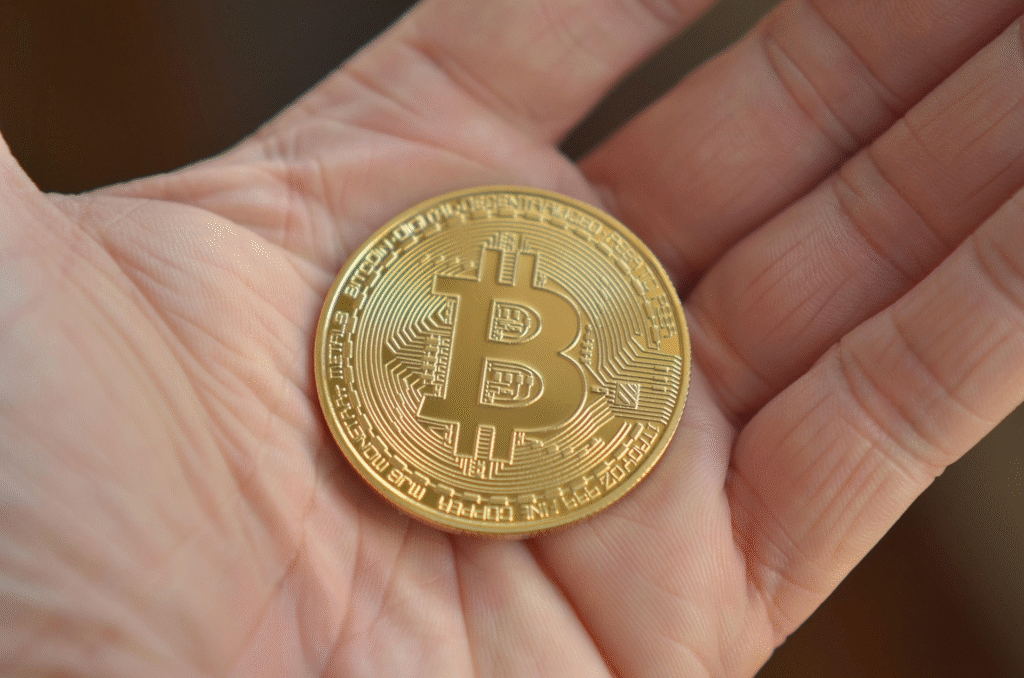
Can Bitcoin Become a Global Reserve Currency? : The first and best-known cryptocurrency, Bitcoin, has been controversial for a long time. It was first hailed for its promise to transform the financial industry, but it has since come under fire for its volatility, scalability problems, and regulatory worries. The idea of Bitcoin becoming a worldwide reserve currency is one of the more audacious theories put up by Bitcoin advocates and futurists. A global reserve currency is one that is utilized for international trade and that governments and other organizations hold in significant amounts as part of their foreign exchange reserves. Could Bitcoin, with its decentralized, digital character, take the place of the U.S. dollar, which has held this position for decades? By examining its advantages and disadvantages as well as the numerous technological, political, and economic obstacles it would encounter,
Bitcoin’s Strengths.
(1) Decentralization and Independence from Governments.
Can Bitcoin Become a Global Reserve Currency? : The decentralized nature of Bitcoin is one of its main benefits. Bitcoin runs on a peer-to-peer network that is tended by thousands of nodes worldwide, in contrast to conventional fiat currencies, which are governed by governments and central banks. Because of this, it is not influenced by the monetary policy of any one nation or central bank. Because it eliminates the chance of inflationary policies, currency manipulation, or poor management by governmental actors, some people find this independence to be exactly what makes Bitcoin so alluring.
By printing more money or implementing measures like quantitative easing, governments and central banks frequently depreciate their own currencies. Countries looking to avoid the dangers of inflation or currency devaluation may find Bitcoin appealing due to this feature, particularly in areas with weak or unstable fiat currencies.
(2) Global Accessibility and Borderless Nature.
Bitcoin’s worldwide accessibility is yet another compelling argument in favor of it becoming a global reserve currency. The Bitcoin network is accessible and transactional to everybody with an internet connection. This stands in sharp contrast to conventional financial systems, which frequently entail middlemen like banks and may necessitate specific institutional or geographic access. Because of its borderless nature, Bitcoin has the potential to become a universal currency for the digital era, facilitating easy cross-border transactions and lowering the expenses and complications associated with doing business internationally.
Furthermore, Bitcoin transactions are possible around-the-clock, in contrast to traditional banking systems that are constrain by weekends and business hours. Bitcoin’s network’s efficiency and speed have the potential to completely transform international financial institutions by facilitating quicker and less expensive international trade and remittances.
(3) Security and Transparency.
Blockchain is a transparent, ledger that keeps track of every Bitcoin transaction. A transaction cannot be change or undone once it has been confirme. This feature could increase confidence in international trade and financial activities by lowering fraud, corruption, and mistakes in the financial system.
Additionally, everyone can monitor and audit transactions because to the Bitcoin blockchain’s transparency, which promotes systemic confidence. Traditional fiat currencies usually do not offer this degree of openness since governments or central banks could not be completely open about their monetary policy or financial operations.
Bitcoin’s Weaknesses.
(1) Volatility.
Bitcoin is one of the most volatile assets in the world, despite its alluring advantages due to its fixed quantity and decentralized structure. Over the years, the price of Bitcoin has fluctuated dramatically; it is not unusual for it to fluctuate by 10%, 20%, or even 30% in a single day. Because of its volatility, Bitcoin is not a reliable medium of exchange or store of value, two essential characteristics of a reserve currency.
Relative price stability is necessary for a currency to serve as a worldwide reserve currency in order to support international trade and long-term planning. If Bitcoin’s value may fall by half in a few weeks, companies, governments, and individuals would be reluctant to accept it as a reserve currency. Particularly in periods of financial crisis or economic uncertainty, this volatility may erode trust in Bitcoin.
(2) Scalability Issues.
The blockchain of Bitcoin is transparent and safe, but it is not very scalable. Compared to conventional payment systems like Visa, which can process hundreds of transactions per second, the Bitcoin network processes just 3–7 transactions per second (TPS). Given the volume of transactions that would need to occur globally for Bitcoin to function as a reserve currency, this scalability issue becomes even more important.
Should Bitcoin became a worldwide reserve currency, the volume of transactions will skyrocket, resulting in sluggish transaction speeds and increased costs. Although scalability issues with Bitcoin have been addrese with solutions like the Lightning Network, these solutions are still in their infancy and it is unclear if they will be successful in taking Bitcoin to a global scale.
(3) Energy Consumption.
To confirm and authenticate transactions, Bitcoin’s Proof of Work (PoW) consensus method needs a substantial amount of processing power and effort. Mining becomes more challenging as more miners join the network, which raises energy usage. At the moment, Bitcoin uses as much energy as whole nations, which raises questions about its potential effects on the environment.
Bitcoin’s energy usage may be a significant barrier to its acceptance as a worldwide reserve currency in a time when environmental and sustainability issues are becoming more and more significant. While some contend that the decentralized nature and security of Bitcoin justify its energy usage, others draw attention to the possibility that it may not be long-term viable.
(4) Regulatory Challenges.
Another significant obstacle to Bitcoin’s status as a worldwide reserve currency is the regulatory framework surrounding it. Different governments have different opinions about cryptocurrency. Bitcoin has been made legal in some nations, such as El Salvador, but its use is prohibited or strictly regulated in others. Widespread adoption may be discouraged by the unclear regulations and the possibility of government crackdowns.
Bitcoin would need to be recognized by institutions and governments worldwide in order to act as a reserve currency. It could be challenging to accomplish such cooperation, nevertheless, considering the political and economic interests involved.
Political and Economic Challenges.
(1) Geopolitical Rivalry.
Supported by the United States’ geopolitical might, the U.S. The balance of power in the world would drastically change if Bitcoin were to replace the dollar. The idea of ceding control of their monetary systems to a decentralized, non-sovereign currency may encounter resistance from nations such as the United States, China, and the European Union. It might be challenging to make Bitcoin a worldwide reserve currency because of these geopolitical conflicts.
For nations that depend on their ability to control the value of their currency through monetary policy tools like inflation or interest rates, this might be problematic.
(2) Adoption Barriers.
Bitcoin’s acceptance as a worldwide reserve currency would necessitate significant adjustments to banking systems, infrastructure, and the financial sector overall. The process of integrating Bitcoin into the systems of governments and financial organizations might be time-consuming and expensive.
The adoption of Bitcoin would also necessitate extensive public education regarding safe usage and storage of Bitcoin in place of the US dollar or other fiat currencies. If this change occurs at all, it may take decades because Bitcoin is still a very young and complicated technology.
Conclusion.
Although Bitcoin’s decentralization, security, and transparency make it an attractive contender for a global reserve currency, there are major barriers that will keep it from soon dispensing with the US dollar or other fiat currencies. These include of its energy consumption, scaling problems, volatility, and the intricate regulatory environment.
Bitcoin must overcome these obstacles and be widely by governments, financial institutions, and corporations to become a worldwide reserve currency. Addressing the political and economic difficulties that accompany such a shift would also require international collaboration and clear regulations.
Bitcoin is unlikely to completely replace conventional reserve currencies anytime soon. Rather than becoming the main worldwide reserve currency.

