

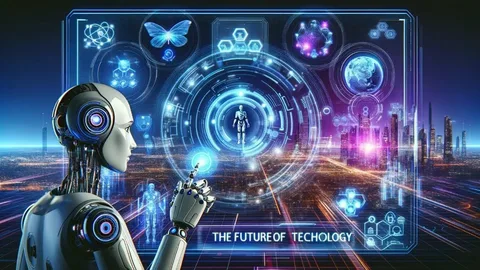
The future of technology: trends and predictions ahead reveals a world on the brink of transformations more profound than anything humanity has experienced. We stand at an inflection point where artificial intelligence, quantum computing, biotechnology, and other emerging innovations converge to reshape every aspect of human existence. The next decade will witness technological breakthroughs that make today’s cutting-edge innovations seem primitive by comparison. From artificial general intelligence surpassing human cognitive abilities to brain-computer interfaces enabling direct neural control of devices, the technological landscape is evolving at exponential rates. Understanding these emerging trends isn’t just intellectual curiosity—it’s essential preparation for a radically different future. This comprehensive exploration examines the most significant technological developments on the horizon and their implications for society, economy, and daily life.
Artificial Intelligence: The Defining Technology of Our Era
Artificial intelligence dominates discussions about technological futures, and for good reason. AI’s trajectory suggests it will fundamentally transform civilization within the next decade.
From Narrow AI to Artificial General Intelligence
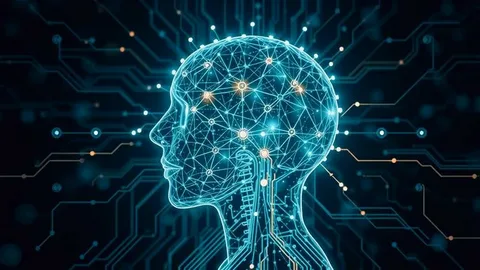
Today’s AI excels at specific tasks—playing chess, recognizing images, translating languages—but lacks general reasoning abilities. Artificial General Intelligence (AGI), capable of human-level reasoning across any domain, represents the next frontier.
Leading AI researchers predict AGI arrival between 2027 and 2035, though timelines remain uncertain. AGI would revolutionize every field simultaneously: scientific research, creative arts, business strategy, education, and governance. The economic implications alone—estimated at trillions of dollars in value creation—dwarf previous technological revolutions.
AI in Healthcare Revolution
AI transforms medicine from reactive treatment to predictive prevention. Machine learning algorithms now diagnose diseases from medical images with accuracy surpassing human specialists in many cases.
Emerging Healthcare Applications:
- Personalized Medicine: AI analyzes genetic profiles to tailor treatments to individual patients, maximizing effectiveness while minimizing side effects
- Drug Discovery: AI accelerates pharmaceutical development from 10+ years to potentially months, identifying promising compounds faster than traditional methods
- Predictive Diagnostics: Wearable devices with AI analytics detect health issues before symptoms appear, enabling early intervention
- Robotic Surgery: AI-guided surgical systems perform procedures with superhuman precision, reducing recovery times and complications
Ethical Challenges and Governance
As AI capabilities expand, ethical questions intensify. How do we ensure AI alignment with human values? Who controls powerful AI systems? How do we prevent misuse while promoting beneficial applications?
International AI governance frameworks are emerging, but lag behind technological development. The next decade will determine whether AI enhances human flourishing or creates new risks requiring unprecedented coordination.
Quantum Computing: Unlocking Computational Impossibilities
Quantum computers leverage quantum mechanics principles to solve problems impossible for classical computers, representing a computational paradigm shift with profound implications.
Current State and Near-Term Progress
Google, IBM, and other tech giants have demonstrated “quantum advantage”—solving specific problems faster than classical supercomputers. However, practical quantum computers solving real-world problems remain nascent.
2026-2030 Quantum Timeline:
- 2026-2027: Quantum computers with 1,000+ stable qubits emerge, enabling more complex calculations
- 2028-2029: First commercially viable quantum applications in drug discovery, materials science, and cryptography
- 2030+: Quantum-classical hybrid systems become standard for certain computational tasks
Revolutionary Applications
Drug Discovery and Materials Science: Quantum computers simulate molecular interactions at atomic levels, accelerating development of new medicines and materials with properties impossible to achieve otherwise.
Cryptography and Cybersecurity: Quantum computers threaten current encryption methods while enabling quantum-secure communications. The race to develop post-quantum cryptography intensifies as quantum capabilities advance.
Optimization Problems: From supply chain logistics to financial modeling, quantum computers solve complex optimization problems exponentially faster than classical approaches.
Climate Modeling: Enhanced computational power enables more accurate climate predictions, informing effective mitigation strategies.
The Future of Technology: Trends and Predictions Ahead in Biotechnology
Biotechnology merges biology with technology, creating capabilities to edit genetic code, grow organs in labs, and extend human dramatically.
CRISPR and Genetic Engineering
CRISPR gene-editing technology enables precise DNA modifications, opening possibilities from eliminating genetic diseases to enhancing human capabilities.
Near-Term Applications:
- Curing sickle cell disease, certain cancers, and inherited conditions
- Agricultural improvements creating drought-resistant crops and disease-resistant livestock
- Bioengineered organisms producing pharmaceuticals, biofuels, and materials
Long-Term Possibilities:
- Designer babies with selected traits (raising profound ethical questions)
- Extended human lifespans through cellular reprogramming
- Cognitive enhancements and physical augmentations
Regenerative Medicine and Organ Engineering
Lab-grown organs and tissues promise to eliminate transplant waitlists and revolutionize treatment of injuries and degenerative diseases.
Technological Developments:
- 3D bioprinting creates functional tissue and simple organs
- Stem cell therapies regenerate damaged tissues
Longevity Science
The field of longevity research aims to extend healthy human lifespan, treating aging as a treatable condition rather than inevitable decline.
Companies and research institutions invest billions in senolytic drugs (eliminating aged cells), NAD+ boosters, and other interventions showing promise in extending healthspan. While human immortality remains science fiction, significantly extending healthy lifespan to 100-120 years appears increasingly feasible.
Brain-Computer Interfaces: Merging Mind and Machine
Brain-computer interfaces (BCIs) create direct communication pathways between brains and external devices, enabling revolutionary capabilities from medical treatments to cognitive enhancement.
Medical Applications Leading the Way
Initial BCI deployments focus on restoring lost functions:
Current and Near-Term Uses:
- Paralyzed patients controlling prosthetic limbs through thought alone
- Restoring vision to blind individuals via visual cortex implants
- Treating neurological conditions like Parkinson’s disease and epilepsy
- Helping locked-in patients communicate
Consumer BCIs and Cognitive Enhancement
Companies like Neuralink aim to bring BCIs to healthy individuals, enabling:
- Direct brain-to-computer information transfer
- Enhanced memory through digital storage integration
- Accelerated learning by downloading skills or information
- Telepathic communication between BCI-equipped individuals
Realistic Timeline:
- 2026-2028: Medical BCIs become standard treatment for certain conditions
- 2029-2032: First consumer BCIs for healthy individuals receive regulatory approval
- 2033+: BCIs transition from medical/accessibility devices to enhancement tools for general population
Renewable Energy and Climate Technology
Addressing climate change requires technological innovation at unprecedented scales. Clean energy technologies are advancing rapidly, making sustainable futures increasingly viable.
Nuclear Fusion Breakthrough
Nuclear fusion—the power source of stars—promises virtually unlimited clean energy. Recent breakthroughs suggest commercial fusion power within 10-15 years.
Multiple companies and government projects achieved “fusion ignition” (more energy out than in) in recent years. Scaling to commercially viable power plants represents the next challenge, with optimistic projections for first grid-connected fusion reactors by 2035.
Carbon Capture and Climate Engineering
Direct air capture technologies remove CO2 from the atmosphere, while other climate engineering approaches offer potential mitigation strategies:
- Enhanced rock weathering accelerating natural carbon sequestration
- Ocean iron fertilization boosting algae growth
- Solar geoengineering reflecting sunlight (controversial due to unknown risks)
Autonomous Systems and Robotics
Self-driving vehicles and intelligent robots promise to reshape transportation, manufacturing, and service industries fundamentally.
Near Future (2027-2030):
- Level 4 autonomy (no human intervention needed in defined areas) becomes common in cities with supporting infrastructure
- Autonomous delivery vehicles and robotaxis operate commercially in major metropolitan areas
- Long-haul trucking sees partial automation with remote human oversight
Long-Term (2031+):
- Level 5 autonomy (full self-driving anywhere, any conditions) approaches viability
- Personal vehicle ownership declines as autonomous ride-sharing becomes default transportation
- Urban design transforms as parking requirements disappear and road space repurposes
Humanoid Robots Enter Workforce
Advances in AI, actuators, and power systems make capable humanoid robots economically viable for the first time.
Applications:
- Warehouse and logistics operations
- Elderly care and assistance
- Dangerous jobs (mining, firefighting, disaster response)
- Household assistance and companionship
Tesla, Boston Dynamics, and Figure AI lead development, with commercial deployments expected to scale significantly by 2028-2030. [Internal link: “How Robotics Will Transform Industries by 2030”]
The Metaverse and Spatial Computing
Virtual and augmented reality technologies mature into “spatial computing”—blending digital and physical worlds seamlessly.
Beyond Gaming: Practical Applications
Education and Training: Immersive simulations enable experiential learning impossible in physical classrooms—medical students practice surgeries, engineers design in 3D space, historians explore recreated ancient civilizations.
Remote Collaboration: Spatial computing creates presence superior to video calls, with virtual offices and meeting spaces feeling genuinely collaborative.
Technological Requirements
Mainstream adoption requires advances in:
- Lightweight, comfortable headsets worn for hours
- High-resolution displays eliminating screen-door effects
- Haptic feedback creating realistic touch sensations
- 5G/6G networks providing low-latency connectivity
Conclusion
The future of technology: trends and predictions ahead paints a picture of unprecedented transformation touching every dimension of human experience. Artificial intelligence, quantum computing, biotechnology, brain-computer interfaces, renewable energy, autonomous systems, and spatial computing converge to create possibilities our ancestors couldn’t imagine—and challenges requiring wisdom to navigate successfully.
These technological revolutions promise tremendous benefits: curing diseases, solving climate change, extending healthy lifespans, creating abundance, and expanding human capabilities. Yet they also introduce risks requiring proactive management: employment disruption, privacy concerns, ethical dilemmas, and potential misuse of powerful technologies.
Success in this rapidly evolving landscape demands adaptability, continuous learning, and thoughtful engagement with technology’s role in society. The future isn’t predetermined—it will be shaped by choices we make today about development priorities, governance frameworks, and values we embed in emerging technologies.
Ready to navigate the future of technology successfully? Stay informed by subscribing to our newsletter delivering weekly insights on emerging trends and breakthrough innovations. Follow our blog for in-depth analysis of technological developments and their implications. Join our community to discuss the future of technology: trends and predictions ahead with fellow forward-thinkers.
Share this article with colleagues, friends, and family to spark conversations about technology’s trajectory and our collective future. The technological revolution accelerates daily—understanding these trends positions you to adapt successfully, seize opportunities, and contribute meaningfully to shaping tomorrow’s world.

