

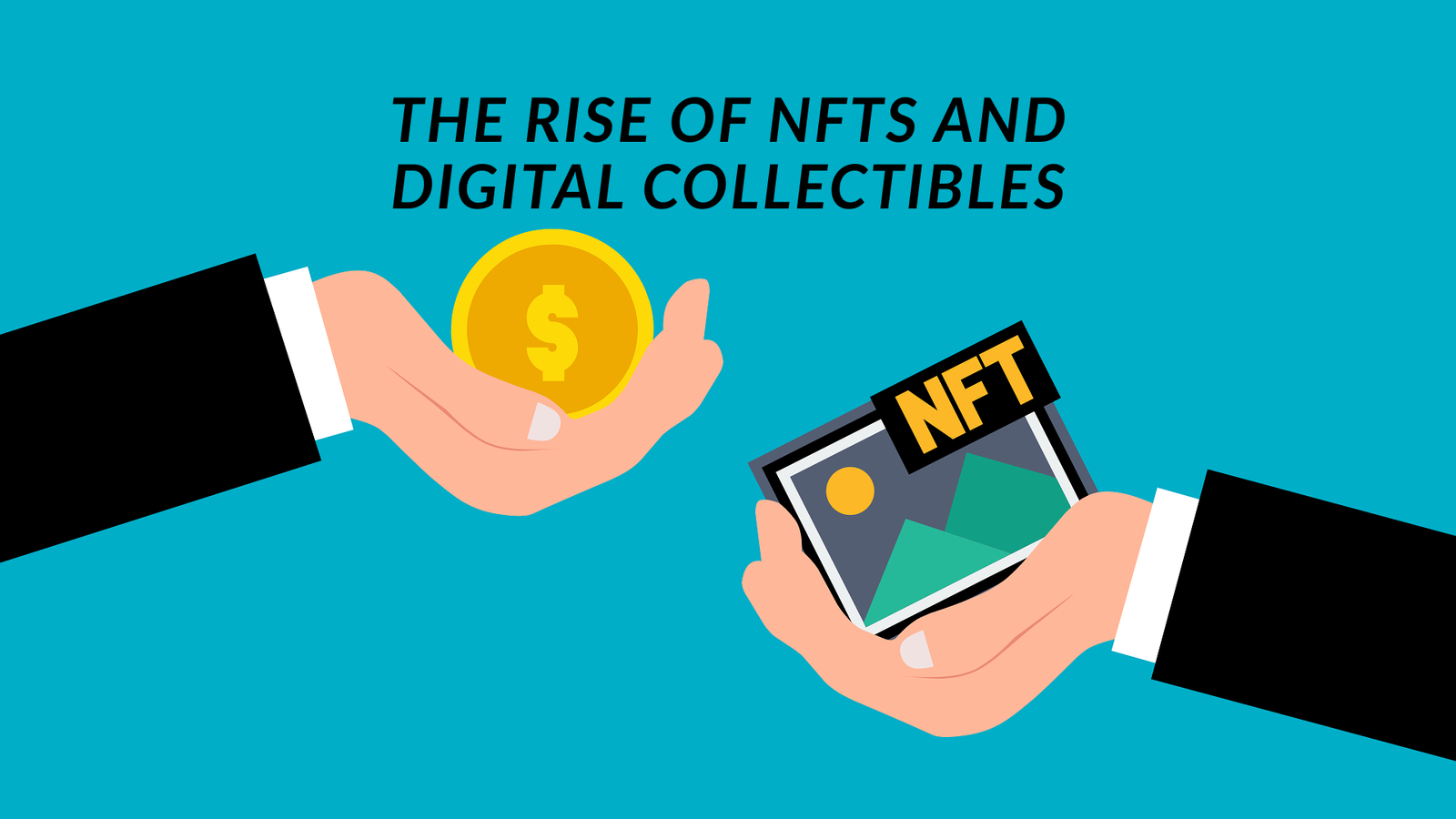
The Rise of NFTs and Digital Collectibles: In the digital age, the emergence of NFTs and digital collectibles has transformed our understanding of value, creativity, and ownership. NFTs, which are based on blockchain technology, enable unique verification of digital assets, such as music, art, and virtual products, turning them into limited-edition, tradeable commodities.
NFTs have caused a significant change in the creative economy, transforming how we buy, sell, and interact with digital content across increasingly immersive online environments, despite arguments about sustainability, speculation, and long-term utility.
The Rise of NFTs and Digital Collectibles.
The Rise of NFTs and Digital Collectibles: Over the past few years, the digital world has seen a tremendous upheaval driven by new technologies that challenge long-standing notions about ownership, identity, and value online. Non-fungible tokens, or NFTs for short, are one of the most disruptive of these technologies. NFTs, hitherto a little-known idea primarily among the blockchain and cryptography communities, became widely accepted in 2020–2021, swiftly transforming from specialized digital assets into a multibillion-dollar cultural and economic phenomenon.
Their ascent changed the creator economy as a whole as well as the fields of art, entertainment, gaming, and finance. NFTs have caused a paradigm shift in our understanding of digital property, despite uncertainty and skepticism.
Understanding NFTs: A New Model of Digital Ownership.
The Rise of NFTs and Digital Collectibles: NFTs are essentially distinct digital tokens that are kept on a blockchain, usually Ethereum, though they are currently supported by many other blockchains. NFTs are different from cryptocurrencies like Bitcoin or Ether, which are fungible, meaning that each unit may be exchanged for another. The metadata that sets each token distinct from the others enables it to be associated with a particular digital asset, such as music, films, artwork, virtual goods, domain names, and more.
The indisputable proof of ownership and validity that the token offers is what makes NFTs unique, not just the digital content itself—anyone can copy an image or video online. Transparency, ease of transferability across markets, and resistance to tampering characterize this blockchain-based provenance.
Why NFTs Took Off: Technology, Culture, and Economics.
Although NFTs emerged in the mid-2010s, several converging factors fueled their explosive rise about five years later.
(1) Blockchain Maturity.
>By 2020, blockchain networks were stronger, with better infrastructure for token minting and trading, as well as better tools for developers.
(2) The Creator Economy Boom.
The COVID-19 epidemic drove a global trend toward digital work and online innovation, which made room for new revenue structures. Beyond traditional social media platforms, where platform owners and algorithms dominated the value, artists, singers, designers, and influencers were searching for ways to diversify their sources of income. NFTs gave authors direct, middleman-free access to consumers, frequently enabling them to receive royalties from subsequent sales.
(3) Cultural Momentum and Celebrity Adoption.
NFTs gained widespread recognition thanks to well-known endorsements from actors, musicians, and athletes. The distinction between the traditional and digital art markets was blurred by events such as Beeple’s digital piece Everydays: The First 5000 Days, which sold for over $69 million at Christie’s and garnered international attention.
(4) The Psychology of Collecting.
With digital scarcity, instantaneous global trading, and social visibility, NFTs revolutionized this age-old practice. Similar to wearing clothing or collecting tangible mementos, owning an NFT became a way for members of online groups to show their identities.
NFTs in Art: A Creative Revolution.
The Rise of NFTs and Digital Collectibles: During the NFT boom, the art world perhaps experienced the most significant change. After years of marginalization in traditional galleries, digital artists have discovered a booming market. NFTs gave digital art legitimacy as an investment and collectible.
Capabilities not feasible in the realm of physical art were made available by smart contracts. Royalties, which previously solely benefited collectors and auction houses, might be programmed into artists’ NFTs to guarantee that they received a portion each time the artwork changes hands. For many digital creators, this strategy promoted a more sustainable way of life by redistributing economic power within the creative ecosystem.
NFTs also promoted experimentation. Artists used interactive media, augmented reality, generative algorithms, and even virtual-world installations.
NFTs in Gaming and Virtual Worlds.
Beyond the realm of art, NFTs found a natural home in the game business. Although purchasing in-game goods, skins, and virtual currency has long been a habit for gamers, these resources were usually restricted to centralized gaming platforms. By enabling users to purchase, sell, and trade goods outside of the game world, NFTs popularized the idea of actual digital ownership.
Collectibles, Brands, and Community.
NFTs also provided new opportunities for brands and fan communities. Big businesses, like fashion giants and sports organizations.
Examples include:
- Sports highlight NFTs that allow fans to “own” iconic moments
- Fashion NFTs that granted access to exclusive product drops
- Membership-based NFT communities where tokens acted as digital passes to events, content, or private groups
Challenges and Controversies.
Despite their rapid ascent, NFTs have sparked debate and criticism across several fronts.
(1) Market Volatility and Speculation.
Widespread hype, quick price swings, and speculative buying were the hallmarks of the early NFT boom. Many customers witnessed a sharp decline in the value of their NFTs when the market calmed.
(2) Environmental Concerns.
Because of their significant energy usage, early NFT transactions on proof-of-work blockchains caused environmental concerns. The discussion brought attention to the need for more environmentally friendly infrastructure, even though many blockchains.
(3) Copyright and Authenticity Issues.
>NFTs to stolen content or instances of artists’ work being mine without their permission brought attention to weaknesses in intellectual property protection and verification. These difficulties highlighted how difficult it is to connect digital files—which are infinitely replicable—to blockchain ownership.
(4) Regulatory Uncertainty.
Governments around the world are still assessing how NFTs mesh with the current tax, securities, and consumer protection regimes. For investors and producers, this changing legal environment brings both opportunity and concern.
The Future of NFTs.
Despite fluctuations in hype, NFTs are likely to remain a core component of the digital economy. As the technology matures, they may become less about speculative art sales and more about practical applications.
(1) Utility-Driven NFTs.
Future NFTs may serve as tickets, memberships, certifications, or tokens unlocking digital services. This shift toward utility could bring stability and expand everyday use cases.
(2) Interoperable Digital Identity.
>NFTs may underpin portable digital identities across metaverse platforms or social networks, allowing users to carry their reputation, avatar accessories, and achievements with them. (
3) Enterprise Adoption.
Companies may increasingly tokenize supply chains, intellectual property, or customer-engagement programs, using NFTs as verifiable digital certificates.
(4) Integration with AI and Generative Media.
>As AI-generated content grows, NFTs could become the mechanism for tracking provenance, authorship, and authenticity of digital creations in an era of deepfakes and infinite AI replication.
Conclusion.
A significant shift in how we engage with digital information, appreciate creativity, and comprehend ownership in the digital age has been brought about by the emergence of NFTs and digital collectibles. The underlying technology is still developing and has an impact on art, gaming, entertainment, identity, and business, even though the first buzz cycle has subsided.

